Hand-Drawn Bow Valentines Day PNG SVG
A Soft, Sweet Bow That Feels Like a Hug
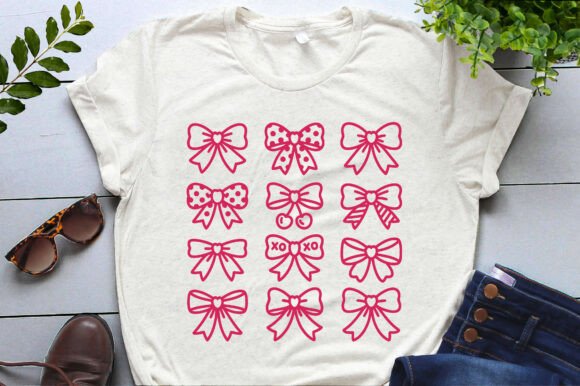
First impression? This Hand-Drawn Bow Valentines Day PNG SVG lands with quiet charm—not flashy, not fussy, but unmistakably handmade in spirit. The bow is fluid and slightly asymmetrical, with gentle loops and a relaxed ribbon tail that curls just enough to suggest movement. There’s no rigid symmetry or digital perfection here, and that’s its strength. As an embroidery designer who’s stitched hundreds of holiday motifs, I immediately saw it on a baby onesie—soft pink thread on ivory cotton, tiny satin-stitched loops catching the light like a whisper. It’s not shouting “Valentine’s Day!”; it’s leaning in with warmth.
Where It Shines: Real Projects, Real Fabric
I tested Hand-Drawn Bow Valentines Day PNG SVG across three real-world uses: a linen tea towel for a local boutique, a cotton blend sweatshirt for a small-batch Etsy launch, and a felt-backed embroidered patch for kids’ backpacks. In each case, the design held up beautifully—not because it’s technically complex, but because its simplicity translates cleanly into stitch. The curves are generous, the negative space open, and the overall footprint compact enough for a 4” hoop without crowding. On the tea towel, it stitched crisply with medium-density fill stitch and a light tear-away stabilizer. On the sweatshirt, I used cut-away backing and kept thread tension even—no puckering, no distortion. And as a patch? The clean vector outlines made digitizing straightforward, especially for the outer satin-stitched edge.
This isn’t a design built for dense, multi-layered appliqué or photorealistic shading. It’s ideal for custom apparel, embroidered patches, nursery decor, personalized gifts, and small shop merchandise where authenticity matters more than intensity. Think: aprons for bakeries, pillow covers for wedding suites, kitchen towels for bridal showers, or baby caps for newborn photo sessions. Its gentle scale and organic line work make it feel intentional—not stock, not generic.
Where to Pause—and Why
That same softness becomes a consideration on certain fabrics and applications. On highly textured fabrics like bouclé or thick terry cloth, the finer ribbon details can blur—so I’d simplify the inner loop detail or increase stitch density slightly if using it on a plush robe or blanket. On stretchy knits (like lightweight jersey tees), test first with basting stitches and a lightweight stabilizer; the bow’s flowing shape can warp if the fabric shifts mid-stitch. And while the design works well on dark fabric, avoid ultra-fine black-on-black thread combos—the subtle contours fade. For caps or curved surfaces, keep the design under 3.5” wide and confirm your embroidery file accommodates curve compensation.
Also worth noting: the Hand-Drawn Bow Valentines Day PNG SVG includes high-res PNGs (4500x5400px, 300 DPI, transparent background), plus EPS, AI, and SVG vector files. That means you’re covered for both digital mockups and physical embroidery—but remember: vectors need proper digitizing for machine use. Don’t assume the SVG will stitch as-is. Always convert to an embroidery file format (PES, DST, EXP, etc.) using trusted software or a digitizer, and check stitch count and jump threads before running on fabric.
What It Adds to Your Finished Product
Customers notice feeling before finish. When someone sees this bow on a hand-stitched tote bag at a craft fair, they don’t read “valentine”—they feel tenderness. That emotional resonance lifts perceived value. A simple bow becomes a signature touch: a consistent motif across your Etsy listings, a unifying element in your boutique branding, or a thoughtful accent on personalized gifts. It supports brand consistency without demanding attention—it complements, rather than competes.
For craft business owners, it’s a low-risk, high-return design asset. It scales gracefully from 2” patches to 5” tote front-center placements. It reads clearly in printable mockups (try it in grayscale first to assess contrast), and it photographs well on both light and dark backgrounds—critical when you’re updating your shop gallery or social feed. Most importantly, it feels trustworthy: no over-rendered gradients, no pixelated edges, no forced cuteness. Just honest, approachable illustration—exactly what handmade buyers respond to.
Practical Designer Notes Before You Stitch
- Always test on scrap fabric—especially if stitching on textured, stretchy, or dark material.
- Check thread color contrast early: try the bow in blush, charcoal, sage, and cream to see which best honors its hand-drawn softness.
- Review stitch density—this design doesn’t need heavy fills. Light-to-medium density keeps it breathable and drape-friendly on apparel.
- Confirm hoop size and placement—its natural width fits comfortably in a 4”–5” hoop, but measure your garment’s seam allowance and curve before finalizing.
- Inspect small details digitally before sending to your machine: zoom in on the ribbon ends and inner loops to ensure no stray anchor points or thin vector lines will cause stitching errors.
- Test in black-and-white mockups to gauge silhouette strength—this bow relies on shape, not shading.
- Use appropriate stabilizer: tear-away for stable wovens, cut-away for knits, and fusible for lightweight linens.
- Verify licensing terms before selling finished embroidered items or bundling the design in digital product kits—commercial use rights aren’t implied by file inclusion alone.
Final Thought: A Design That Serves the Maker
Hand-Drawn Bow Valentines Day PNG SVG isn’t just another holiday graphic. It’s a quietly versatile Illustrations asset—one that respects the time, skill, and intention behind every embroidery project. Whether you’re a seasoned apparel decorator prepping for Valentine’s season or a hobbyist stitching your first batch of personalized gifts, it gives you room to interpret, adapt, and own the outcome. It doesn’t ask you to compensate for its flaws—because it has none worth mentioning. Instead, it invites care, clarity, and connection. And in the world of handmade product and commercial embroidery, that’s rare. That’s valuable. That’s why I’ll be using it again—on baby blankets, boutique tags, and maybe even my own sweater next February.