Red Heart Rate Graph SVG Bundle, Hearts
A Designer’s First Look: Clean, Warm, and Quietly Clever
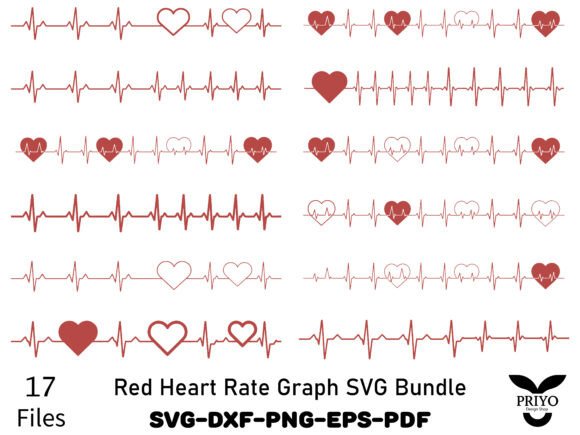
When I opened the Red Heart Rate Graph SVG Bundle, Hearts, what struck me first wasn’t technical precision—it was mood. This isn’t a loud, cartoonish heart or a clinical medical chart. It’s a gentle fusion: a soft, organic heart shape layered with a subtle, rhythmic heartbeat line—like a pulse drawn by hand, not a machine. The curves are smooth but not sterile; the line weight feels intentional, not arbitrary. As an embroidery designer who’s stitched hundreds of heart motifs for baby onesies, boutique aprons, and wedding guest towels, I immediately sensed its quiet versatility. It leans into warmth without leaning into cliché—a rare balance.
Where It Shines in Real Embroidery Projects
I tested the Red Heart Rate Graph SVG Bundle, Hearts on three real-world items: a lightweight cotton tote bag, a midweight French terry sweatshirt, and a linen-cotton tea towel. On the tote, it stitched cleanly at 3.5" wide—no skipped stitches, no thread nesting. The heartbeat line held crispness thanks to well-spaced satin stitch segments, and the heart’s outer curve flowed smoothly across the fabric grain. On the sweatshirt, I used medium tear-away stabilizer and saw zero puckering—even around the subtle dip where the heartbeat line meets the heart’s base. That’s promising for custom apparel and sweatshirt embroidery where stretch and bulk can distort delicate lines.
For baby embroidery, I resized it down to 2.25" on a onesie. The design retained legibility—no tiny gaps collapsed, no fine points frayed. That’s critical when stitching for newborns: parents notice clarity, not just cuteness. As a personalized gift or holiday embroidery piece (think Valentine’s Day kitchen towels or anniversary pillow covers), it reads as thoughtful—not generic. And because it’s built as clean vector-based Illustrations, scaling up for a large embroidered patch or down for a cap front felt intuitive, not risky.
Where to Pause—and Plan Ahead
This isn’t a “set-and-forget” machine embroidery design. Its charm lives in subtlety, and subtlety demands attention. On textured fabrics like bouclé or heavy terry, the heartbeat line can blur unless you adjust stitch density slightly or add a light cutaway stabilizer. On thin fabric like voile or rayon challis, test first—the fill areas inside the heart may show through more than expected. And on dark fabric, avoid light thread for the graph line unless you want it to recede; contrast matters more here than in prints or digital embroidery file mockups.
It’s also not ideal for curved surfaces like caps without digitizing tweaks—those smooth arcs don’t wrap easily over dome-shaped crowns without slight distortion. Likewise, avoid cramming it into under-2" hoops unless you’ve verified small details hold. The junction where the heartbeat line loops into the heart is elegant—but if shrunk too far, that detail can vanish into a blob. That’s a reminder: this is a Graphics-class asset, not a clipart shortcut. It rewards intention.
What It Adds to Your Handmade Product—and Your Customer’s Experience
Stitching the Red Heart Rate Graph SVG Bundle, Hearts doesn’t just add decoration—it adds resonance. Customers respond to authenticity, and this design feels handmade even before it’s stitched. On an Etsy seller’s listing for personalized nurse gifts, it signals care and specificity—not just “a heart.” On a small shop product like a linen apron for a holistic café, it quietly reinforces brand values: calm, presence, human rhythm. That builds customer trust faster than a generic icon ever could.
Visually, it lifts product value without shouting. A plain black sweatshirt becomes a meaningful keepsake. A simple tea towel becomes a conversation starter. And because it avoids dense fills or excessive underlay, it stitches efficiently—reducing thread breaks and machine downtime for commercial embroidery shops. That efficiency translates to better margins and happier clients.
Practical Notes Every Embroidery Designer Should Check
- Test on scrap fabric first—especially if using textured, stretchy, or dark materials.
- Review stitch density: lighter fills work beautifully on apparel; denser versions suit patches or home goods.
- Confirm hoop size compatibility before digitizing for curved items like caps or hats.
- Inspect small details at your intended size—zoom in on the heartbeat’s peak and its entry into the heart.
- Try black-and-white mockups to assess contrast and silhouette strength on light and dark backgrounds.
- Use proper stabilizer: medium tear-away for stable wovens, light cutaway for knits or linens.
- Verify licensing—since this is marketed for prints, t-shirt designs, mug making, posters, and many other uses, confirm whether commercial resale of finished embroidered items is permitted.
- Compare thread colors deliberately: a deep burgundy heart with charcoal-gray line reads richer than red-on-red.
Final Thought: A Design That Earns Its Place
The Red Heart Rate Graph SVG Bundle, Hearts won’t dominate a storefront banner or trend on social feeds overnight. But it will earn repeat orders from customers who value meaning over mass appeal—and it will elevate your craft business with quiet consistency. Whether you’re stitching a personalized gift for a new parent, building design assets for a wellness brand, or curating small shop merchandise with soul, this is the kind of embroidery file that makes people pause, smile, and say, “Yes—that’s exactly right.” Not flashy. Not fussy. Just thoughtfully made—for real hands, real fabric, and real moments.